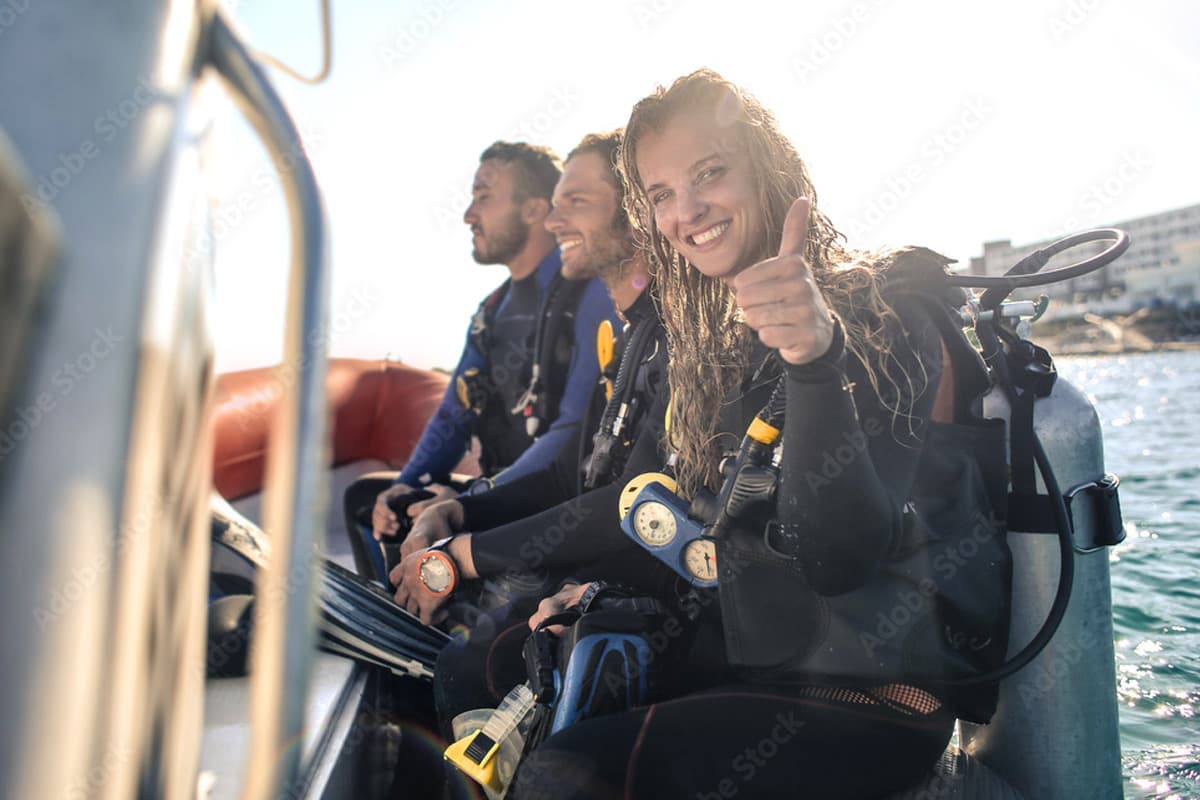
Scuba Diving Tips - Tips To Preserving Marine Life Thru Scuba Diving

October 4, 2008 on 7:00 am | In All About Scuba Diving Tips, Safety Tips, Resources Tip | No Comments

Scuba Diving Tips - Tips To Preserving Marine Life Thru Scuba Diving


How to Help Preserve Marine Life Through Scuba Diving?
By Felix Tero

Issues such as global warming and environmental degradation have stirred many sectors of society towards social responsibility and the stewardship of our natural resources. Organizations such as REEF (Reef Environmental Education Foundation) and NARC (Neptune’s Army of Rubbish Cleaners) are grass roots environmental agencies that organize research and educational programs, including clean up activities that aim to entice divers, marine researchers and even non-divers to become stewards of aquatic ecosystems and marine life per se. If you are a diving enthusiast and would like to participate in the global effort of preserving marine habitats, here are a few noteworthy activities that you can engage into.

  1. It commences from land. The activities of man on land will eventually affect the state of marine life in one way or another. So why not join the local scuba diving community in the conduct of coastal clean-up activities that are organized every year. This can help reduce the volume of hazardous wastes infiltrating marine habitats.
  2. Taking whatever your hands can carry. Reef clean-up involves the removal of non-biodegradable materials without disturbing the fragile balance of marine flora and fauna thriving in these biotic underwater habitats. Garbage collected from reefs can be further segregated, recycled or reprocessed to prevent its unwanted return to the ocean.
  3. Surveying Fish and Reef Species. Besides the removal of trash from the waters, REEF also maintains a growing database of fish and other marine species with their corresponding abundance scores. This is accomplished through the Roving Diver Volunteer Program that beckons certified scuba divers inclined to multi-task, as they go about with their individual, recreational diving pursuits in the waters of Canada and the US, with the survey of marine species and recording of its manifestation based on the inputs required by a proforma survey sheet. Said activity not only seeks to provide a dynamic, primary data for marine research and product development but also fosters a profound understanding and appreciation of marine life for volunteers.

Think you have got what it takes to become a steward of marine ecosystems? Non-divers can contribute to this pursuit by participating in coastal clean-up activities. Nonetheless, certified scuba divers can do so much more to this end being in close contact with coral reefs and other reef formations. This can be conducted without upsetting the fun part of any recreational scuba dive with the simple retrieval of any garbage you find on the reef. Moreover, becoming a REEF surveyor puts more meaning to the definition of marine life stewardship. Just make sure you’re properly geared up with the right scuba equipment to keep you properly insulated, mobile and neutrally buoyant as you probe into the depths of the ocean to inspect the bounties of marine ecosystems

Felix Tero produces web content for Scuba Suppliers, Inc. Get the scuba equipment that’s right for you at http://www.scubasuppliers.com

Article Source: http://EzineArticles.com/?expert=Felix_Tero
http://EzineArticles.com/?How-to-Help-Preserve-Marine-Life-Through-Scuba-Diving?&id=1537958


Scuba Diving Tips - Zen And The Art Of Scuba Diving

October 2, 2008 on 10:01 am | In All About Scuba Diving Tips, Safety Tips, Resources Tip | No Comments

Scuba Diving Tips - Zen And The Art Of Scuba Diving


Zen and the Art of Scuba Diving
By Harish S Kohli

Watching whales splashing their fins near your boat on a bright warm day can be one of the most inspiring moments of your life. But watching these large creatures indulging in love plays or just indolently surfing and diving can become an infatuation that will bring you back, time and again, for more.

It was on my holiday to Madagascar that I first got the opportunity of watching whales. That whale watching tour off the coast of Madagascar has possibly run in my mind more times than any other holiday in my life. But not until I went to Belize and saw the beautiful coral and the coloured variety of the underwater world on a snorkelling tour in the Belize Barrier Reef did I actually became interested in diving.

My partner has been for many years obsessed with running, until quite suddenly she found herself unable to move. She was diagnosed with sciatica. Then one day she returned from a doctor’s appointment and said plainly, “I need to go diving.”

“What makes you think of that?” I asked.

“Well, the doctor says so. Evidently, it is a great form of exercise that doesn’t put any strain on the joints and it takes you into another world, where you can de-stress.”

FREE TRIAL DIVE

At the hotel in Belize, I checked at the reception if diving lessons were available. “Oh yes, Sir, you can book yourself for a free trial dive,” and the receptionist guided me to the swimming pool. It was absolutely amazing and within a few days, we were able to make a trial dive and enjoy the beautiful corals off the Belize coast.

We were hooked. Soon, we were taking bizarre courses and buying equipment and drooling over dive magazines, admiring photographs of leafy sea dragons. We were spending all our holidays in more and more distant tropical hideouts searching for the perfect coral reef.

THE SILENT WORLD

Everyone is doing it. I am a mountaineer but most of my friends are divers. And who would have thought that John Prescott, Ken Livingstone, David Jason, Brian May and Natalie Imbruglia share a secret passion? The latest converts are Princes William and Harry. But why?

It all started 60-odd years ago, when a clever young Frenchman called Jacques Cousteau teamed up with Emile Gagnan, an industrial gas-control engineer, to produce the aqualung. The aqualung introduced the world to scuba (SCUBA - self-contained underwater breathing apparatus) diving and soon more sophisticated diving equipment was developed to make sport diving safe and memorable so that we could, with relative ease, descend beneath the surface of the sea into ‘the silent world’.

We now know this ’silent world’ from watching wonderful documentaries on, for example, the Discovery and National Geographic channels. Through the eyes of David Attenborough and other skilled and inspiring commentators, we have penetrated the surface and entered this different world that has such a profound effect on most people. The photographer David Doubilet - the Ansel Adams of the underwater world, who has done more than anyone else to bring this mysterious other place to the public’s attention through the pages of National Geographic over the past 30 years - clearly remembers the first time he crossed the threshold. “It was like entering my very own wonderworld. I looked back at the surface and saw the light sparkling, shifting and moving. It was very emotional - going through the looking glass into a different universe. To this day I still feel the same excitement about crossing into the world below.”

But hours on the sofa watching someone else’s underworld adventures can’t prepare you for the majesty and beauty that wait below the waves. First, you are weightless - floating like an astronaut (Nasa trains its recruits underwater) - and with a few dives you become remarkably graceful. You glide through the water with a minimum of effort, and herein lies another attraction of diving: do as little as possible. Cousteau said in his book The Silent World, published in 1956, that if you look underwater, “civilisation ends with one last bow”. Until you experience it yourself, it is hard to explain how alien this world is.

Newcomers worry about the huge quantity of gear that seems so cumbersome on the surface. But surprisingly, once you are underwater, you are literally weightless. The gear is perfectly adapted for underwater mobility. A burst of air into the stab jacket and we glide gently upwards, a delicate tug on the dump and we start to descend. In between we fly. Slowly taking in our surroundings, we seem to have arrived in an underwater botanical garden.

DIVING IN GOD’S GOLDFISH BOWL

Once you are underwater, your world changes for ever. Unlike a wildlife safari, where days of searching may or may not win a prize view of a lioness hunting her prey, this magnificent world allows you to view the hunt in the open. Life, death and sex go on all around you - lion fish stalk their prey; silly clownfish defend their homes against all-comers, however large and weird; little slugs and snail-like creatures that would make you run a mile on the surface have you transfixed. And all you do is watch. Some people take photographs, but most just enjoy the sheer wonder of it all, return to the surface, and try to explain to the rest of us why it is so special. Someone on the boat mentioned that diving is like swimming in God’s goldfish bowl and I am beginning to see what he means.

ZEN, MEDITATION AND DIVING

As a beginner it is natural to struggle with cumbersome equipment and movements but as you acquire experience and confidence, you arrive at a state of Zen-like aplomb. You do nothing, just drift on the current, conserving your air so that you can stay down longer. I was snorkelling on the shores on Belize when I noticed a local diver dive down and stay there for what appeared to be hours. He just stayed and floated gently moving his fins while I was struggling and yet getting nowhere. I felt he was at such peace with himself and the environment around him that I decided it was time for me to try some meditation.

Diving can be another form of meditating. It soothes your nerves and calms your mind. What is interesting is that women are as good at diving as men, if not better (they tend to be better at conserving air and often have better thermal insulation). Enveloped in your own silent world, you are totally focused on the sensual delight of your own experience. A dive generally lasts for about an hour and during that time, you are truly immersed. You don’t have to be a marathon runner and strong. All you need is a burning desire to travel and a whim for an adventure.

The author, Harish Kohli is an avid traveller and explorer. He has walked and skied across the Himalayas, travelled to the five continents, written articles and a book. His latest passion is to share this adventures and experiences and to offer free tips on adventure travel to fellow travellers. If your looking for an adventure holiday, then visit http://www.awimaway.com

Article Source: http://EzineArticles.com/?expert=Harish_S_Kohli
http://EzineArticles.com/?Zen-and-the-Art-of-Scuba-Diving&id=1537862


Next Page »

Powered by WordPress with Pool theme design by Borja Fernandez.
Entries and comments feeds. Valid XHTML and CSS. ^Top^